
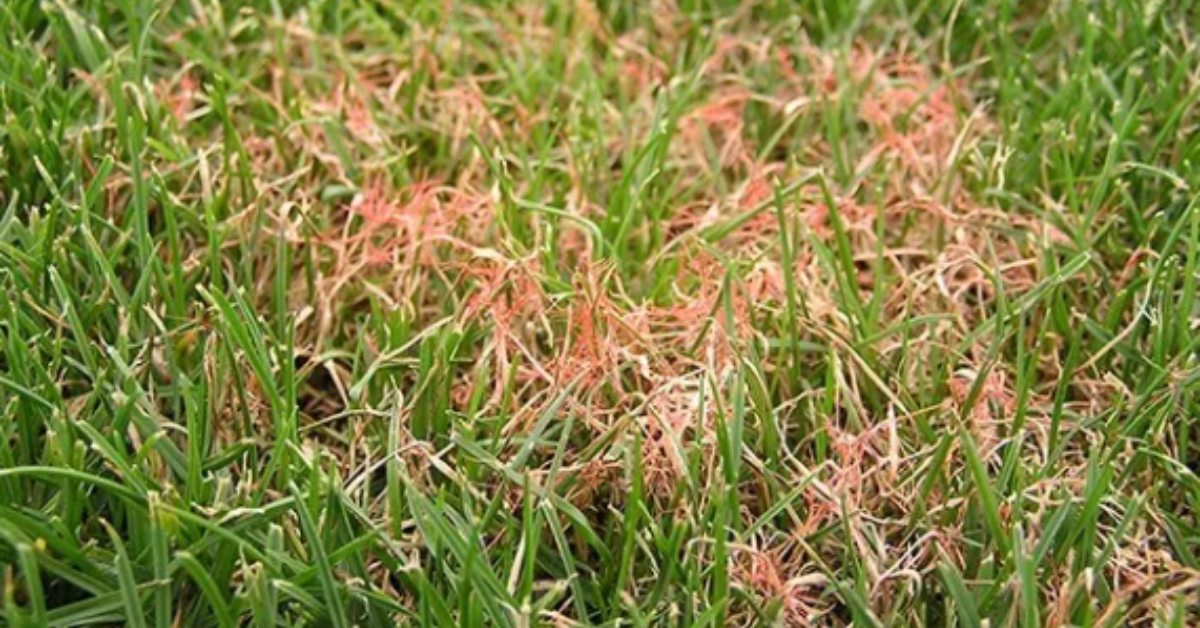
As September unfolds, many homeowners in Calgary and Red Deer may still be seeing the lasting effects of a stubborn lawn ailment—Red Thread Disease.
What Is Red Thread Disease?
A fungal infection caused by Laetisaria fuciformis, Red Thread shows itself through pink to red thread-like strands emerging from grass blades, along with bleached, straw-colored patches on lawns.
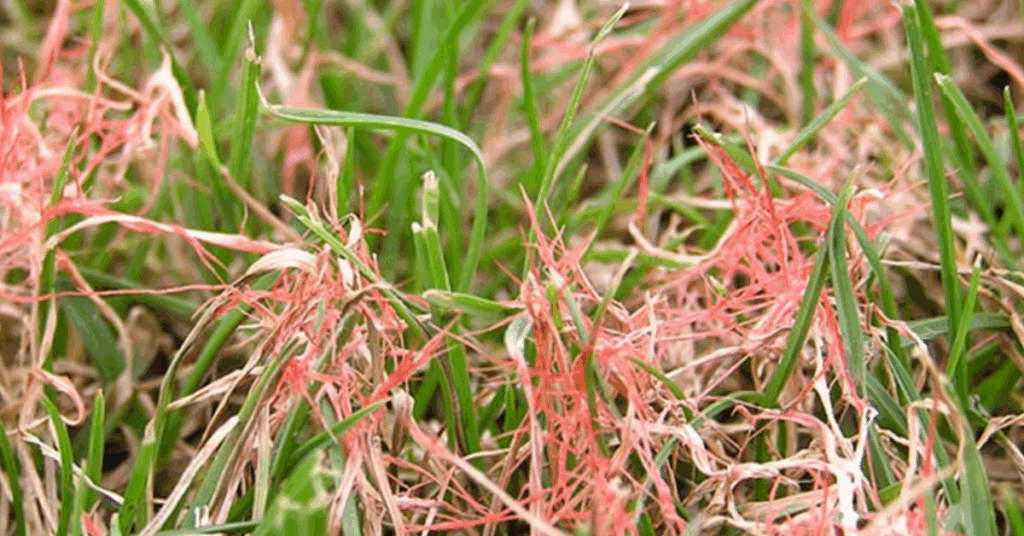
Red thread symptoms. Photo: Peter Landschoot, Penn State
Why Summer 2025 Was Especially Bad
Wet, humid, and cooler-than-average conditions across much of southern and central Alberta created the perfect environment for Red Thread to spread. Similar weather patterns in nearby regions were reported to cause some of the worst outbreaks in years, and Calgary and Red Deer homeowners likely noticed the same issue in their lawns.
Why Does Your Lawn Look Like That?
-
Cool, moist conditions allowed the fungus to thrive longer than normal.
-
Lawns with low nitrogen, compacted soil, heavy thatch, or poor drainage were particularly vulnerable.
-
Susceptible grasses—such as fine fescues, perennial ryegrass, and Kentucky bluegrass—are common in Alberta lawns.
Symptoms to Look For
-
Straw-colored or bleached patches that are circular or irregular in shape, often expanding and merging.
-
On closer inspection, pink or red thread-like fungal strands appear at the tips of grass blades.
How to Help Your Lawn Recover
-
Light Nitrogen Fertilizer — Encourages healthy grass growth to outpace the fungus.
-
Aeration & Dethatching — Improves airflow and drainage, reducing fungal spread.
-
Water in Early Morning Only — Prevents excess overnight moisture that feeds fungi.
-
Bag Clippings During Outbreaks — Limits the movement of fungal spores.
-
Overseed with Tall Fescue — A more resistant variety that strengthens your lawn.
-
Fungicide? Only If Necessary — Usually not required, as most lawns recover naturally once weather improves.
Earth Smart’s Eco-Friendly Approach
At Earth Smart Property Solutions, our team can help your lawn thrive come spring:
- Aeration & overseeding in fall—September through October—for healthier turf next spring. Learn more about these services here – aeration and overseeding.
-
Balanced fertilizer programs designed to encourage resilient, disease-resistant lawns. Learn more about our fertilizer services here.
Looking Ahead
With drier fall weather arriving, most Calgary and Red Deer lawns will start to recover naturally. But taking action now—especially with fall fertilizer, aeration and overseeding—will set your lawn up for stronger growth and improved resistance for 2026.
 Need Help with Your Lawn this Fall?
Request a free quote or give us a call today. Your lawn deserves it!
Sources
- ICL, Red Thread on Lawns
- PennState Extension, Turfgrass Diseases: Red Thread (Causal Fungus: Laetisaria fuciformis)
- Scotts, How to Treat Red Thread Disease in the Lawn
- Wisconsin Horticulture, Red Thread
Recent Comments